Topstep No Activation Fee Rules: What You Actually Pay
Topstep's no activation fee structure explained. See what you actually pay in subscriptions, resets, and data fees—plus alternatives to compare before you buy.
Topstep’s no activation fee rules mean the firm does not charge a separate one-time fee to unlock a funded account after you pass the Trading Combine. That is the core of the claim. However, the absence of an activation fee does not mean the total cost of getting funded is zero or even low. Your real spend depends on how many subscription billing cycles you use before passing, whether you reset, which platform you trade on, and whether any data fees apply. This guide maps every cost layer so you can calculate a realistic total before you commit.
For a broader look at how prop firm fees are structured across the industry, visit the PropCatalog pricing hub. If you want to compare Topstep against other firms side by side, the compare section is a useful next step.
What “No Activation Fee” Actually Means at Topstep
Many prop firms charge an activation or account-unlock fee after a trader passes their evaluation. This is a separate charge—sometimes called a “live account fee” or “funding fee”—that sits on top of the evaluation cost. Topstep’s published model does not include this layer. Once you complete the Trading Combine requirements, the transition to a funded account does not trigger an additional activation charge.
This matters for cost comparison because some competing firms list a low monthly evaluation fee but then add a meaningful activation fee at the funded stage. When you compare Topstep’s total cost to a competitor’s total cost, you need to include that competitor’s activation fee in the denominator, not just their evaluation subscription price.
What Topstep’s no-activation-fee policy does not eliminate:
- The ongoing subscription fee during the evaluation period
- Reset fees if you breach a rule and choose to restart
- Platform fees if you use a third-party platform that carries its own charge
- Market data fees, depending on your platform and data provider selection
Verify the current activation fee policy directly on Topstep’s pricing or FAQ page before purchasing, as firms update their fee structures and promotional terms without advance notice.
Cost Comparison Table: Topstep Fee Layers vs. Common Competitor Structures
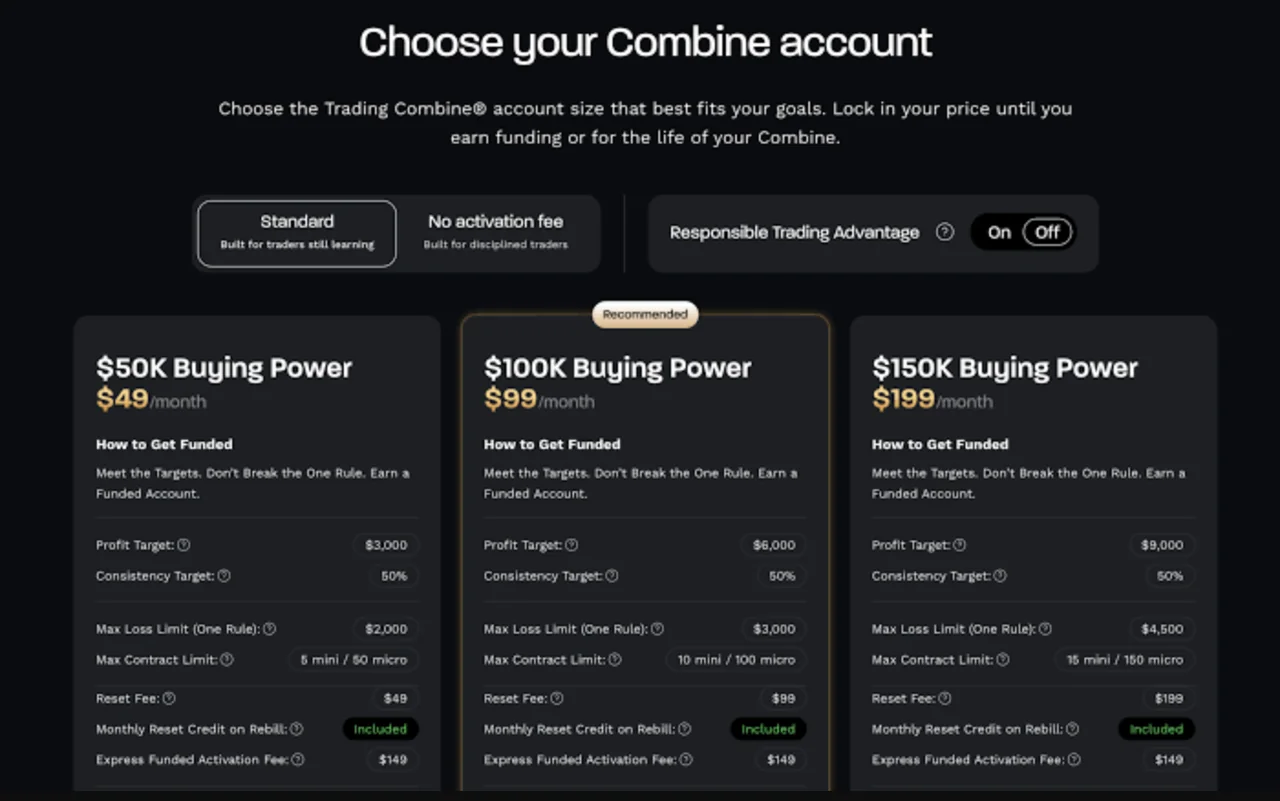
The table below shows the fee categories you should compare across any prop firm, not just Topstep. Exact current prices are not listed here because they change; use this as a verification checklist when you visit each firm’s checkout or pricing page.
| Fee Category | Topstep (verify current) | Firms With Activation Fee (verify current) | Why It Matters |
|---|---|---|---|
| Monthly evaluation subscription | Charged per account size tier | Charged per account size tier | Recurring until you pass or cancel |
| Activation / funding fee | Not charged (verify) | Often charged once at funded stage | Can equal 1–3 months of subscription cost |
| Reset fee | Charged if you reset a breached account | Varies by firm | Adds to total if you breach rules |
| Platform fee | Depends on platform choice | Depends on platform choice | Some platforms are included; others are not |
| Market data fee | Depends on data plan selected | Depends on data plan selected | CME data fees can be significant monthly |
| Withdrawal fee | Verify on payout policy page | Varies by firm | Reduces net payout if charged |
| Consistency rule penalty | Not a direct fee, but affects funded status | Varies by firm | Rule breaches can force a reset or restart |
How to use this table: Open Topstep’s pricing page and a competitor’s pricing page side by side. Fill in each row with the current published figure. Sum the rows for a realistic total-cost-to-funded estimate under different scenarios (pass in one cycle, pass in two cycles, one reset).
Hidden-Cost Checklist Before You Buy
Use this checklist when evaluating Topstep or any futures prop firm. Each item represents a cost that is easy to overlook when you focus only on the headline subscription price.
- Subscription billing cycle: Is the fee monthly, and does it auto-renew? Confirm the renewal date and cancellation policy.
- Reset fee amount: If you breach the trailing drawdown or daily loss limit, what does a reset cost? Is it the same as the original subscription or a discounted rate?
- Platform compatibility: Which platforms are included in the subscription? If you prefer a platform not on the included list, what is the additional monthly cost?
- Market data fees: Does the subscription include CME futures data, or is that billed separately? Professional vs. non-professional data rates differ significantly.
- Activation fee status: Confirm on the current checkout page that no activation fee applies. Promotional structures can change.
- Payout fee or minimum: Does Topstep charge a fee to process a withdrawal? Is there a minimum payout threshold?
- Consistency rule: Does a consistency requirement affect when you can withdraw? A rule that delays your first payout is an indirect cost.
- Scaling plan impact: If Topstep offers a scaling plan, does moving to a larger account size trigger any fee?
- Promotional pricing expiry: If you signed up at a discounted rate, does the renewal price revert to standard?
- Inactivity or pause policy: Can you pause a subscription without losing progress? If not, inactivity costs you a billing cycle.
What the Subscription Fee Typically Includes
Topstep’s subscription covers access to the Trading Combine environment for a specific simulated account size. Within that subscription, traders generally receive access to at least one supported trading platform, simulated capital at the chosen tier, and the ability to trade within the defined rules window. Confirm the current list of included platforms on Topstep’s platform or FAQ page, as supported platforms and inclusion terms change.
What the subscription does not automatically include in all cases:
- Access to every available platform—some carry an add-on fee
- Professional-grade market data if you qualify as a professional subscriber under exchange rules
- Coaching, mentorship, or educational content beyond what is publicly available
- Guaranteed passage—the subscription buys access to the evaluation, not a funded account
Understanding what is and is not bundled prevents the common mistake of comparing Topstep’s all-in subscription price to a competitor’s base price that excludes platform and data costs.
Activation, Reset, Data, and Subscription Costs to Verify
Because prop firm pricing changes frequently—sometimes in response to promotions, market conditions, or competitive pressure—this section gives you a verification framework rather than figures that may be outdated by the time you read this.
Activation Fee
Navigate to Topstep’s checkout flow for the account size you are considering. If no activation fee line item appears at the funded account stage, the no-activation-fee policy is currently active. If a fee does appear, note the amount and factor it into your total-cost calculation.
Reset Fee
Find Topstep’s reset or restart pricing on their pricing or help-center page. Compare this to the original subscription cost. If the reset fee is close to or equal to the subscription fee, a single breach effectively doubles your cost for that cycle.
Platform and Data Fees
Log into or review Topstep’s platform selection page. Identify which platforms are included at no extra charge and which carry an add-on. For each platform, check whether CME Globex data is bundled or billed separately. Non-professional CME data fees are set by the exchange and passed through by the platform or broker; professional data fees are substantially higher.
Subscription Tiers
Topstep offers multiple account size tiers. Larger simulated accounts carry higher monthly subscription fees. Verify the current tier pricing on the official pricing page. Do not rely on third-party screenshots or cached pages, as prices are updated without notice.
Discount Code Notes
Topstep periodically offers promotional discount codes that reduce the subscription fee for one or more billing cycles. PropCatalog maintains a coupons section where verified discount information is listed when available. A few important caveats apply to any discount you encounter:
- Verify at checkout: A code is only valid if it applies successfully at the current checkout. Codes expire, are limited to new accounts, or are restricted to specific account sizes.
- One-time vs. recurring: Some discounts apply only to the first billing cycle. Your renewal price may revert to the standard rate.
- Stacking restrictions: Discount codes typically cannot be combined with other promotions.
- Source matters: Codes shared on social media or forums may be expired or region-restricted. Use codes from sources that indicate a verification date.
PropCatalog does not list codes as active unless there is a basis to believe they are currently valid. If no code is listed for Topstep in the coupons section, assume none is currently verified.
Rules That Affect Your Real Total Cost
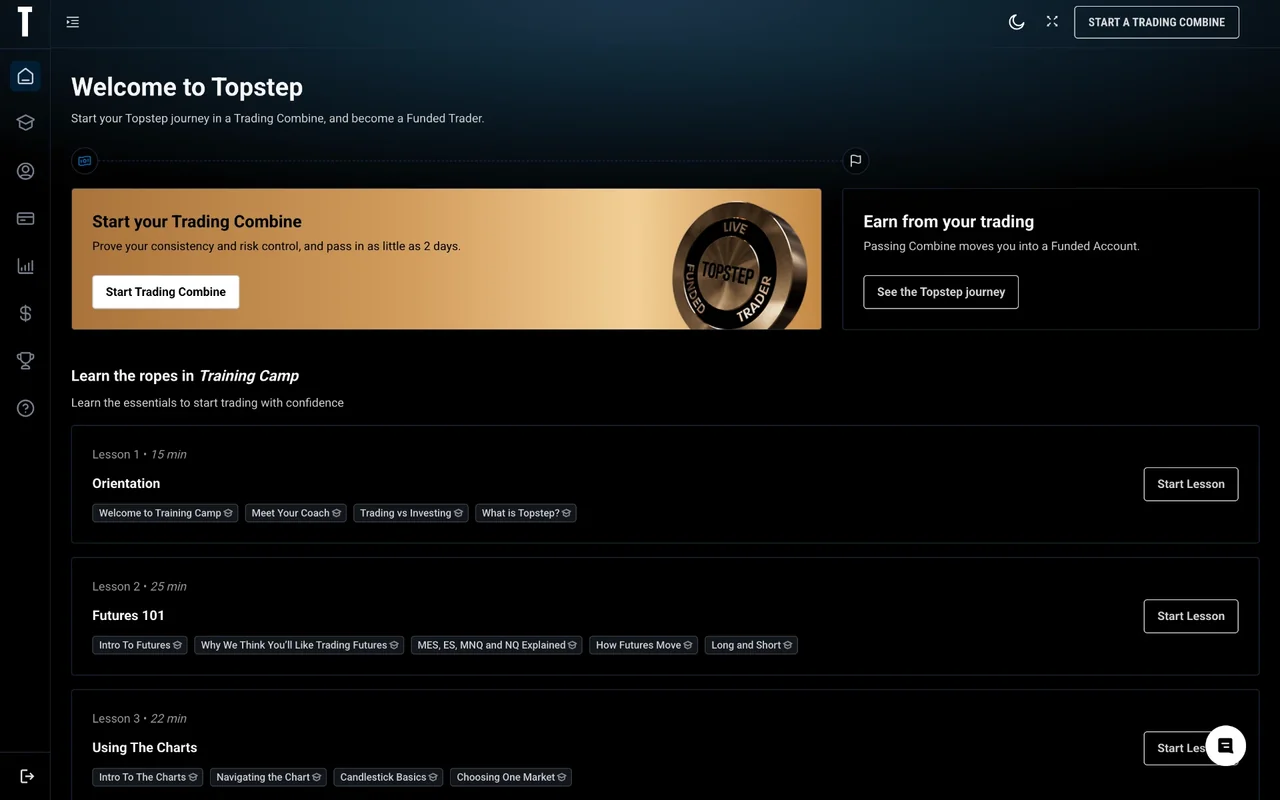
Topstep’s Trading Combine rules are not just performance gates—they directly affect how much you spend before reaching a funded account. Understanding the rules through a cost lens is essential for accurate budgeting.
Trailing Drawdown Rule
Topstep uses a trailing drawdown that moves up as your account equity increases, then locks at a certain point. A breach of this drawdown ends your current Combine attempt. If you breach it, you either lose the subscription period’s remaining value or pay a reset fee to restart. The trailing nature of the rule means early profitable days can raise the floor and make the account harder to hold, which is a risk factor that affects how many billing cycles you may need.
Daily Loss Limit
Exceeding the daily loss limit on any single trading day typically ends that day’s trading or triggers a rule violation. Repeated violations can end the Combine. Each ended Combine that requires a reset adds to your total cost.
Minimum Trading Days
Topstep requires a minimum number of trading days to complete the Combine. This means you cannot pass in a single exceptional day. The minimum day requirement effectively sets a floor on how many days of subscription you consume before you can qualify. Verify the current minimum day count on Topstep’s rules page.
Consistency Rule (if applicable)
Some prop firms apply a consistency rule that limits how much of your total profit can come from a single day. If Topstep applies such a rule to the Combine or funded stage, a single outsized winning day may not count toward your profit target in the way you expect. Verify whether a consistency rule applies and how it is calculated, as this affects how long the evaluation takes and therefore how many billing cycles you pay.
Funded Account Rules and Payout Timing
Once funded, rules governing when you can request a payout affect the real value of the account. A longer waiting period before your first withdrawal is an indirect cost. Review Topstep’s current payout policy, including any minimum profit threshold for the first withdrawal and the processing timeline. For more detail on how payouts work across prop firms, see the PropCatalog reviews section.
Cheaper Alternatives to Compare
Topstep’s no-activation-fee structure is a genuine cost advantage over firms that charge both an evaluation subscription and a funded-account activation fee. However, it is not the only cost-efficient structure in the futures prop space. Before committing, compare the following alternative structures:
One-Time Fee Evaluations
Some prop firms charge a single upfront fee rather than a recurring subscription. If you pass quickly, a one-time fee model can be cheaper than multiple months of subscription. If you take longer to pass or need resets, the subscription model may be comparable or cheaper. Calculate both scenarios with your realistic pass timeline.
Firms With Lower Reset Fees
If you anticipate needing one or more resets, a firm with a lower reset fee may produce a lower total cost even if its subscription is slightly higher. Compare reset fee structures explicitly.
Firms With Shorter Minimum Day Requirements
A shorter minimum trading day requirement means you can potentially pass in fewer billing cycles. If your trading style allows for consistent daily performance, a firm with a five-day minimum may cost less in subscription fees than one with a fifteen-day minimum.
Forex and Crypto Prop Firms
If you trade forex or crypto rather than futures, the fee structures differ significantly. Forex prop firms often use a one-time challenge fee model with no recurring subscription. Explore the challenge types section for a breakdown of evaluation structures across asset classes. Note that different asset classes carry different rule sets, payout structures, and regulatory considerations.
Evaluation-Free or Instant Funding Models
A small number of firms offer instant or near-instant funded accounts without a traditional evaluation, typically at a higher upfront cost or with tighter profit-split terms. These are worth modeling if your primary concern is avoiding the time and subscription cost of a multi-week evaluation.
When comparing any alternative, apply the same hidden-cost checklist from the earlier section. A lower headline price with high reset fees, platform add-ons, and an activation fee may cost more in total than Topstep’s subscription-only model.

Jade-Kyra Cronje
Jade-Kyra covers trading platforms, strategy-focused content, and crypto prop firm research for PropCatalog.
FAQs
Does Topstep charge an activation fee to get a funded account?
Topstep’s published model does not include a separate activation fee at the funded account stage. After completing the Trading Combine requirements, the transition to a funded account does not trigger an additional charge under the current structure. Verify this on Topstep’s current pricing or checkout page before purchasing, as fee structures can change.
What fees do I actually pay at Topstep if there is no activation fee?
Your primary costs are the monthly subscription fee for the account size tier you choose, any reset fees if you breach a rule and choose to restart, platform fees if you use a platform not included in the base subscription, and market data fees if they are not bundled. Verify each of these on Topstep’s current pricing and platform pages.
How does the trailing drawdown rule affect my total cost?
The trailing drawdown sets a floor that rises with your equity and can make the account harder to hold after profitable days. A breach ends your current Combine attempt and requires either a new subscription cycle or a reset fee payment. Understanding this rule is essential for estimating how many billing cycles you may need before passing.
Are Topstep discount codes reliable, and where should I find them?
Discount codes vary in validity, expiry, and scope. The most reliable approach is to check PropCatalog’s coupons section for codes that have a noted verification basis, then confirm the code applies at Topstep’s current checkout before completing your purchase. Do not assume a code shared on social media or a forum is currently active.
Is Topstep’s no-activation-fee model always cheaper than competitors?
Not necessarily. Whether Topstep’s total cost is lower depends on how many subscription cycles you use, whether you need resets, and what platform or data fees apply. A competitor with an activation fee but a lower subscription and faster pass requirements could cost less in total for a trader who passes quickly. Always model your realistic scenario across multiple firms before deciding.
Where can I verify Topstep’s current rules and fees?
Verify current subscription prices, reset fees, platform fees, data fees, and Trading Combine rules directly on Topstep’s official website, specifically their pricing page, help center, and rules or FAQ section. Third-party sources, including this guide, may not reflect the most recent changes. For comparative context, the PropCatalog compare section and reviews section provide additional reference points.