MyFundedFutures vs Topstep: Which Prop Firm Fits Your Trading Style?
Compare MyFundedFutures vs Topstep on rules, pricing, drawdown, payouts, and trader fit. A decision framework, not a generic ranking.
Choosing between MyFundedFutures and Topstep comes down to more than price. Both are futures-focused prop firms offering funded account evaluations, but they differ meaningfully on drawdown structure, payout mechanics, platform access, and how strictly they enforce consistency rules. This page breaks down each decision point so you can match the firm to your actual trading behavior — not just the lowest fee.
Quick Verdict
Neither firm is universally better. MyFundedFutures tends to appeal to traders who want flexible evaluation structures and multiple account size options at competitive price points. Topstep has a longer track record in the funded futures space and a well-documented community and educational layer. The right choice depends on your drawdown tolerance, preferred platform, payout expectations, and how you trade around news events and position limits.
Use the sections below as a decision checklist. If a specific rule, price, or policy is not confirmed by the firm’s current help center or checkout page, this guide will flag it as something you must verify directly before purchasing.
Side-by-Side Comparison Table
| Factor | MyFundedFutures | Topstep | Decision Verdict |
|---|---|---|---|
| Evaluation structure | Single-step and multi-step options (verify current offerings on site) | Trading Combine — single-step evaluation | Verify which structure matches your timeline preference |
| Account sizes available | Multiple tiers; confirm current range on checkout | Multiple tiers; confirm current range on checkout | Compare the specific tier you need, not just the headline size |
| Drawdown type | Trailing and/or static options depending on plan — verify current rules page | Trailing drawdown during Combine; confirm funded account rules separately | Trailing drawdown is more restrictive for volatile traders; verify which applies to your funded stage |
| Profit target | Varies by account size — confirm on rules page | Varies by account size — confirm on rules page | Calculate target as a percentage of account; lower percentage targets are easier to reach |
| Consistency rule | Check current rules page for any single-day profit cap or consistency requirement | Check current rules page; Topstep has historically applied consistency guidelines | Critical for traders who have occasional large-win days; verify before buying |
| News trading | Verify current policy on restricted events | Verify current policy; Topstep has historically restricted trading around major news | If you trade news events, this is a disqualifying factor — confirm before purchasing |
| Payout split | Verify current profit split on payout policy page | Verify current profit split on payout policy page | Compare the split at the account size you plan to trade, not just the advertised headline |
| Payout frequency | Verify minimum days and withdrawal schedule on payout page | Verify minimum days and withdrawal schedule on payout page | If cash flow timing matters, confirm the minimum funded days before first withdrawal |
| Platform support | Verify supported platforms on firm’s platform page | Topstep has historically supported Apex/NinjaTrader/Tradovate — verify current list | If you use a specific platform, confirm compatibility before paying the evaluation fee |
| Evaluation fee | Verify current pricing on checkout page | Verify current pricing on checkout page | Compare monthly vs. one-time fee structures; factor in reset costs |
| Reset policy | Verify reset fee and conditions | Verify reset fee and conditions | Frequent resetters should calculate total cost over multiple attempts |
| Track record / longevity | Newer entrant to the funded futures space | Established firm with longer operational history | Longevity is not a guarantee of reliability, but it provides more community data points |
How to use this table: Identify the two or three rows that are non-negotiable for your trading style. Those rows should drive your decision, not the overall score.
Rules and Drawdown Differences
Drawdown structure is the single most important rule to understand before choosing a futures prop firm. A trailing drawdown follows your highest intraday equity and locks in as you profit — meaning a strong morning session can tighten your buffer for the afternoon. A static drawdown is fixed from the account start and does not move against you as you profit.
What to verify for MyFundedFutures: Confirm whether the drawdown on your specific plan is trailing or static, whether it trails on intraday highs or end-of-day equity, and at what point (if any) the drawdown locks in permanently. These details are typically on the firm’s rules or FAQ page and can differ between evaluation and funded stages.
What to verify for Topstep: Topstep’s Trading Combine has historically used a trailing drawdown. Confirm whether the funded account stage uses the same mechanism or switches to a different structure. Also confirm whether the drawdown trails on intraday or end-of-day equity — this distinction significantly affects how you manage open positions.
Consistency Rules
Some prop firms apply a consistency rule that limits how much of your total profit can come from a single trading day. If one day accounts for more than a set percentage of your overall profit, the evaluation may be flagged or the payout withheld. This rule disproportionately affects traders who hold through high-volatility events or who have occasional outsized winning sessions.
Before purchasing either evaluation, search the firm’s rules page or help center for the terms “consistency,” “single-day profit,” or “best day rule.” If the rule exists, calculate whether your historical trading pattern would trigger it.
News and Event Trading
Both firms have historically applied restrictions around major economic releases such as FOMC announcements, NFP reports, and CPI data. The specific restricted window (e.g., two minutes before and after) and the list of restricted events can change. If news trading is part of your strategy, treat this as a hard filter: confirm the current policy before paying any evaluation fee. See the rules hub for a broader breakdown of how prop firms typically structure news trading restrictions.
Position Limits and Overnight Holding
Verify whether each firm allows overnight or weekend positions on your specific account tier. Some plans prohibit holding positions past the daily session close. If you use swing-style futures strategies, this is a disqualifying rule if it applies.
Pricing and Discount Differences
Evaluation fees for both firms vary by account size and plan type. Because pricing changes frequently and promotional discounts are time-limited, this guide does not publish specific dollar amounts. Instead, use this framework to compare costs accurately.
- Monthly vs. one-time fee: Some evaluations charge a recurring monthly fee until you pass. Others charge a one-time fee per attempt. Calculate your expected number of attempts and multiply accordingly.
- Reset cost: If you breach a rule and want to restart without paying the full evaluation fee again, confirm the reset price. For traders who expect multiple attempts, reset cost can exceed the initial fee over time.
- Scaling plan fees: If either firm offers a scaling path to larger funded accounts, confirm whether additional fees apply at each stage.
- Discount codes: Both firms periodically offer promotional codes. Verify any code at checkout before assuming it is active — codes expire and may be account-size specific. Check the pricing hub for any currently documented promotions.
To compare accurately: go to each firm’s checkout page for the same account size tier, note the fee structure, and calculate total cost across two to three realistic attempts including resets. That number is your true comparison point, not the headline monthly fee.
Payout Policy Differences
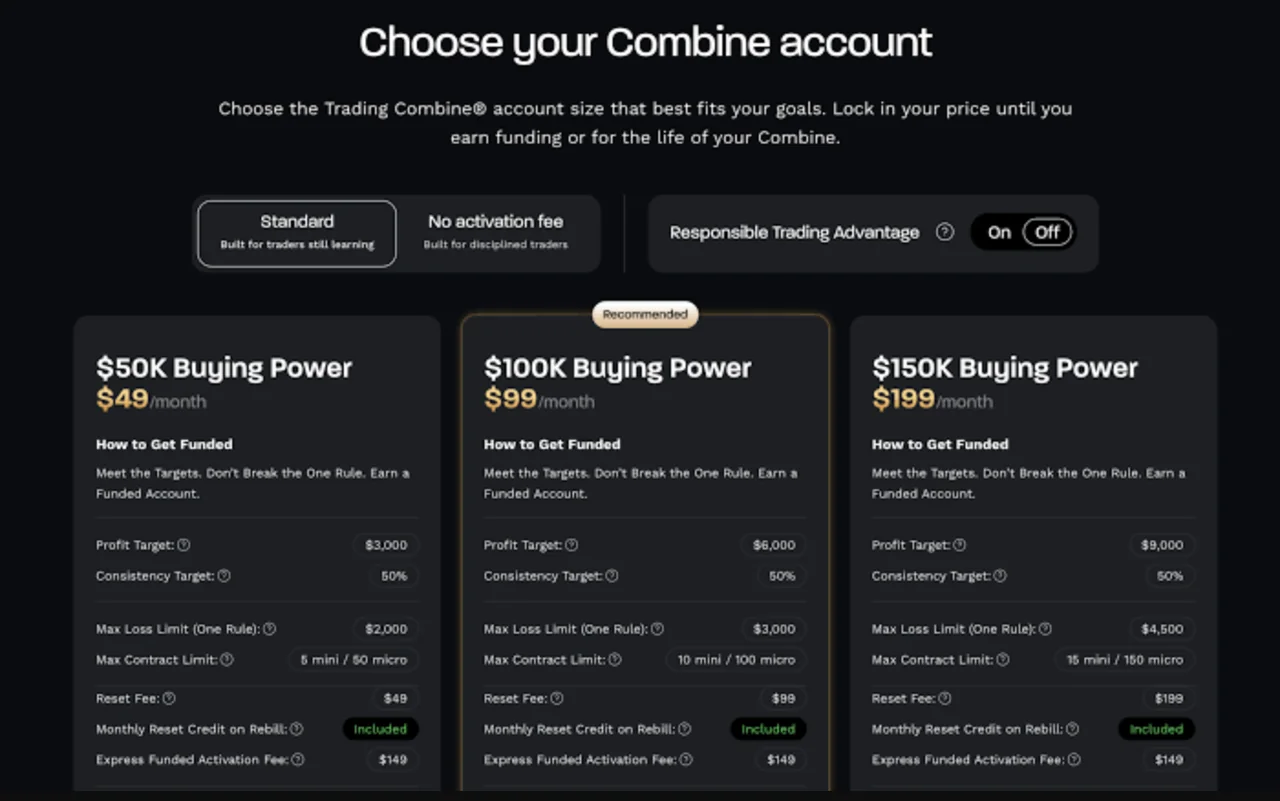
Payout policy is where many traders encounter surprises after passing an evaluation. The key variables to confirm for both firms are listed below. Do not assume these match between firms or match what you read in a forum post — verify each point on the firm’s current payout policy or help center page.
- Profit split percentage: What percentage of profits do you keep? Confirm this for your specific account size, as some firms offer different splits at different tiers or after reaching a scaling milestone.
- Minimum funded days before first withdrawal: Most firms require a minimum number of trading days in the funded account before you can request your first payout. Confirm this number.
- Minimum withdrawal amount: Some firms set a floor on withdrawal requests. If your early funded profits are modest, confirm you can withdraw them.
- Payout processing time: Confirm how long the firm takes to process a withdrawal after you submit the request. This is distinct from the payment provider’s transfer time.
- Payout method: Confirm which payment methods are accepted (e.g., ACH, wire, crypto, Deel, Rise). Some methods have additional fees or geographic restrictions.
- Consistency rule at payout stage: Some firms apply a consistency check at the time of withdrawal, not just during the evaluation. Confirm whether a single large-profit day can affect your payout eligibility.
For a broader framework on how to evaluate prop firm payout policies before committing, see the payouts hub.
Platforms, Markets, and Trader Fit
Both MyFundedFutures and Topstep are futures-focused firms. Neither is designed for forex spot trading, stock trading, or options. If you trade those instruments, neither firm is the right match — see the compare hub for firms that support those markets.
Platform Compatibility
Platform support is a practical filter that many traders overlook until after they have paid. If you have years of chart layouts, indicators, and automation built in a specific platform, switching platforms to pass an evaluation adds friction and risk.
For MyFundedFutures: Verify the current list of supported trading platforms on the firm’s platform or FAQ page. Confirm whether your preferred platform is supported at your chosen account size tier, as some firms restrict platform access to higher-tier accounts.
For Topstep: Topstep has historically supported platforms including NinjaTrader, Tradovate, and others through its clearing relationships. Verify the current supported platform list on Topstep’s site, as platform partnerships can change.
Futures Markets Covered
Confirm which futures contracts are tradeable on each platform. Common categories include equity index futures (ES, NQ, YM, RTY), energy futures (CL, NG), metals (GC, SI), and interest rate futures (ZB, ZN). If you specialize in a specific contract, confirm it is available and that no additional restrictions apply (e.g., some firms restrict micro contracts at certain account sizes).
Trader Profile Fit
Use the following profile questions to self-assess before choosing:
- Do you trade around major news events? If yes, confirm news trading policy for both firms before proceeding.
- Do you hold positions overnight or over weekends? If yes, confirm overnight holding rules.
- Do you have occasional large-win days that represent a disproportionate share of your monthly profit? If yes, check the consistency rule carefully.
- Are you on a specific platform you are unwilling to leave? If yes, platform compatibility is your first filter.
- How many evaluation attempts do you realistically expect to need? If more than one, calculate total cost including resets.
- How important is payout speed to you? If cash flow timing matters, the minimum funded days and processing time are critical variables.
Who Should Choose MyFundedFutures
MyFundedFutures may be the better fit if:
- You want to compare multiple evaluation structures (single-step vs. multi-step) and choose the one that matches your timeline.
- You have found that its specific drawdown structure (after verifying on the rules page) is more compatible with your trading volatility.
- The platform it supports matches your existing setup without requiring a switch.
- Its pricing at your target account size is meaningfully lower after accounting for reset costs.
- You have reviewed community feedback from traders who have successfully withdrawn from the firm and found the payout process reliable.
Do not choose MyFundedFutures solely because it appears cheaper at the headline level. Verify the total cost across realistic attempts and confirm the payout policy before committing.
Who Should Choose Topstep
Topstep may be the better fit if:
- You value a firm with a longer operational history and a larger body of publicly available trader feedback.
- The Trading Combine single-step structure matches your preference for a straightforward evaluation path.
- The platforms Topstep supports align with your existing trading setup.
- You have reviewed Topstep’s current payout policy and the terms are acceptable for your cash flow needs.
- You want access to Topstep’s community or educational resources as part of your development process.
Do not choose Topstep solely because it is the more recognized name. Longevity is a useful data point, but it does not guarantee that the current rules, payout terms, or platform support match your needs. Verify current policies directly.
Alternatives to Compare
If neither firm is a clear fit after working through the decision criteria above, consider evaluating these alternatives before purchasing:
- Apex Trader Funding: Known for a single-step evaluation and a different drawdown structure. Compare rules carefully against both firms above.
- Earn2Trade: Offers the Gauntlet Mini evaluation with a different profit target and drawdown structure. May suit traders who prefer a longer evaluation window.
- Take Profit Trader: Smaller firm with a straightforward evaluation structure. Verify payout history and community feedback before committing.
For a broader list of futures prop firms with structured comparisons, see the compare hub and the reviews hub.

Sean Heffernan
Sean leads PropCatalog's data verification and trust research, with a focus on payout conditions, rule changes, and claims that traders should confirm before buying.
FAQs
Is MyFundedFutures or Topstep better for beginners?
Neither firm is designed as a beginner training program. Both require you to pass a funded evaluation by trading profitably within defined risk rules. Topstep has historically offered more community and educational resources, which some newer traders find useful. However, if you are not yet consistently profitable in a simulation environment, passing either evaluation is unlikely regardless of which firm you choose. Confirm what educational or community resources each firm currently offers on their respective sites before using that as a deciding factor.
Can I trade the same futures contracts on both platforms?
Both firms focus on futures markets, but the specific contracts available depend on the platforms they support and any firm-level restrictions. Verify the tradeable contract list for your specific account size on each firm’s platform or rules page. Do not assume that because a contract is available on the platform it is permitted under the firm’s rules.
Do either of these firms allow automated or algorithmic trading?
Policies on automated trading, expert advisors, and algorithmic strategies vary by firm and can change. Check each firm’s current rules page for explicit language on automated trading. If the rules page is ambiguous, contact the firm’s support team and request a written confirmation before using any automated system in your evaluation.
How do I verify that a discount code is still active?
Apply the code at checkout and confirm the discount is reflected in the total before completing payment. Do not assume a code is active based on a third-party site or a forum post with no date. Codes expire, are account-size specific, and are sometimes single-use. The only reliable verification is the checkout page at the time of purchase.
What happens if I breach a rule during the evaluation — can I get a refund?
Refund policies differ between firms and are typically not offered for rule breaches during an active evaluation. Some firms offer a paid reset option that allows you to restart without paying the full evaluation fee again. Confirm the reset policy and refund policy on each firm’s terms of service or FAQ page before purchasing. Do not assume a reset is available or that its cost is the same as the initial fee.
Are these firms regulated financial institutions?
Prop trading firms that provide simulated funded accounts are generally not regulated in the same way as retail brokers or financial advisors. They are typically operating a performance-based evaluation service. This does not make them illegitimate, but it means you should conduct your own due diligence — including reviewing community feedback, checking for a documented payout history, and reading the firm’s terms of service — before committing funds. This page does not constitute financial or legal advice.