Prop Firms That Support cTrader and Copy Trading: Compatibility Guide
Find out which prop firms support cTrader and copy trading, what compatibility checks to run, and what setup mistakes can cost you your funded account.
Finding prop firms that support cTrader and copy trading requires more than a quick platform checkbox on a firm’s homepage. cTrader availability varies by firm, and copy trading permissions are governed separately by each firm’s trading rules — meaning a firm can offer cTrader while explicitly banning signal copying, mirror trading, or third-party EAs that replicate positions from an external account. Before purchasing a challenge, you need to confirm both the platform and the copy trading policy independently, because the two are not automatically linked. This guide walks through how to verify compatibility, what setup risks exist, and what alternatives to consider if a firm does not support your preferred setup.
Does cTrader Actually Support Copy Trading at Prop Firms?
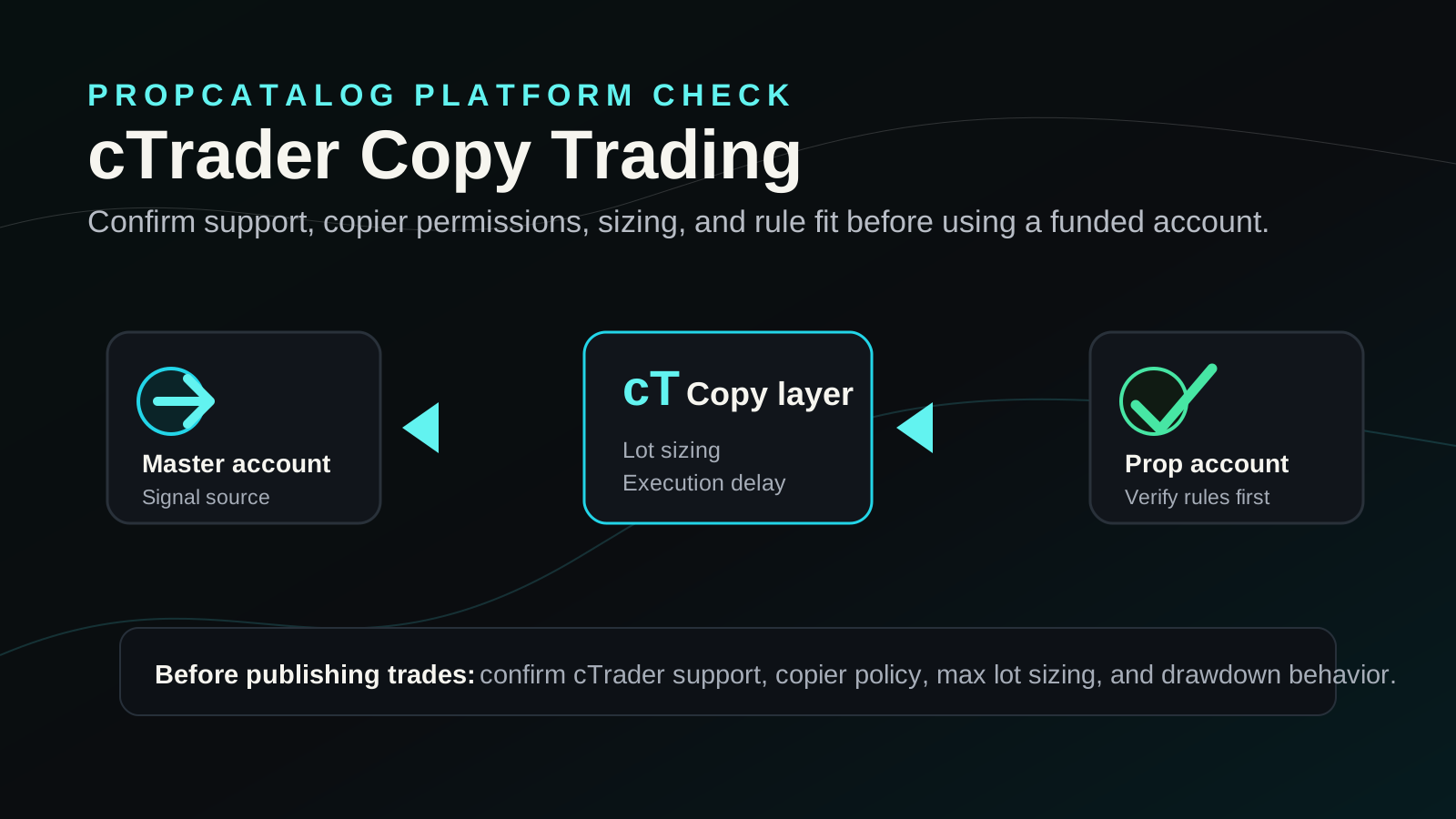
cTrader as a platform has native copy trading infrastructure through cTrader Copy, which allows signal providers to broadcast trades and followers to replicate them automatically. However, whether a prop firm that offers cTrader also permits copy trading on its funded or challenge accounts is a separate question entirely — one determined by the firm’s rulebook, not by the platform’s technical capabilities.
There are three distinct scenarios you may encounter:
- Firm offers cTrader and permits copy trading: The firm explicitly allows traders to receive copied trades on their challenge or funded account, either from their own master account or from a third-party signal provider. This is the least common scenario and must be confirmed in writing.
- Firm offers cTrader but bans copy trading: The platform is available, but the firm’s rules prohibit receiving or sending copied trades. Violations typically result in account termination without a refund of the challenge fee.
- Firm does not offer cTrader at all: The firm uses MetaTrader 4, MetaTrader 5, a proprietary platform, or another third-party solution. In this case, cTrader-based copy setups are not applicable.
Understanding which scenario applies to a specific firm requires reading the firm’s terms of service, FAQ, and trading rules page — not just the platform list on the homepage. See the rules hub for guidance on interpreting prop firm trading restrictions.
Which Prop Firms May Support cTrader
A number of prop firms have listed cTrader as a supported platform at various points. However, platform availability changes when firms switch liquidity providers, renegotiate broker relationships, or update their technology stack. The following is a framework for identifying and verifying cTrader support — not a confirmed live list, because platform availability must be checked directly with each firm before purchase.
When researching whether a firm supports cTrader, look for:
- An explicit platform selection option during the challenge purchase flow (not just a logo on the homepage).
- A help center article or FAQ entry that confirms cTrader account provisioning after passing the challenge.
- Live chat or email confirmation that cTrader is available for the specific account size and challenge type you are considering.
- Community reports on trader forums or Discord servers — though these should be treated as leads to verify, not as confirmed facts.
Firms that have historically mentioned cTrader support include some forex-focused prop firms that partner with brokers using Spotware’s infrastructure. Futures-focused firms and stock or options prop firms almost never use cTrader, as the platform is primarily built for forex and CFD trading. Check the platforms hub for a broader breakdown of which platforms appear across different firm types.
| Firm Type | cTrader Likelihood | Copy Trading Permission | Verification Step |
|---|---|---|---|
| Forex CFD prop firm | Possible — verify per firm | Varies — check rules page | Confirm at checkout and in T&Cs |
| Futures prop firm | Unlikely — most use proprietary or NinjaTrader | Often restricted | Check platform list before buying |
| Crypto prop firm | Rare — most use proprietary dashboards | Varies widely | Confirm via support ticket |
| Stock/options prop firm | Very unlikely | Often not applicable | Check platform FAQ directly |
How Copy Trading Rules Work at Prop Firms
Copy trading at a prop firm is not a single concept. Firms draw distinctions between several related but different activities, and their rules may permit one while banning another. Before assuming your setup is allowed, identify which category your approach falls into.
Types of copy trading setups firms evaluate
- Self-copying: A trader runs a master account (often a personal live account) and copies trades into their prop firm challenge account. Some firms permit this; others ban it because it allows a trader to hedge across accounts.
- Third-party signal following: A trader subscribes to a signal provider and receives copied trades automatically. Most firms ban this because the trading activity is not generated by the account holder.
- EA-based replication: A trader uses an expert advisor or script to mirror trades from another account. Rules on this vary — some firms allow EAs generally but ban those that copy from external sources.
- Group copying or copy farms: Multiple traders copy the same signal into multiple prop firm accounts simultaneously. This is almost universally banned and can result in account termination across all accounts at a firm.
The key document to read is the firm’s trading rules or terms of service, specifically sections covering prohibited strategies, third-party tools, and account management. If the language is ambiguous, send a written support query and keep the response. Verbal or chat confirmations that are not documented carry no weight if a dispute arises later. Visit the rules section for more on how to read prop firm rule pages.
Setup and Compatibility Notes for cTrader Copy Connections
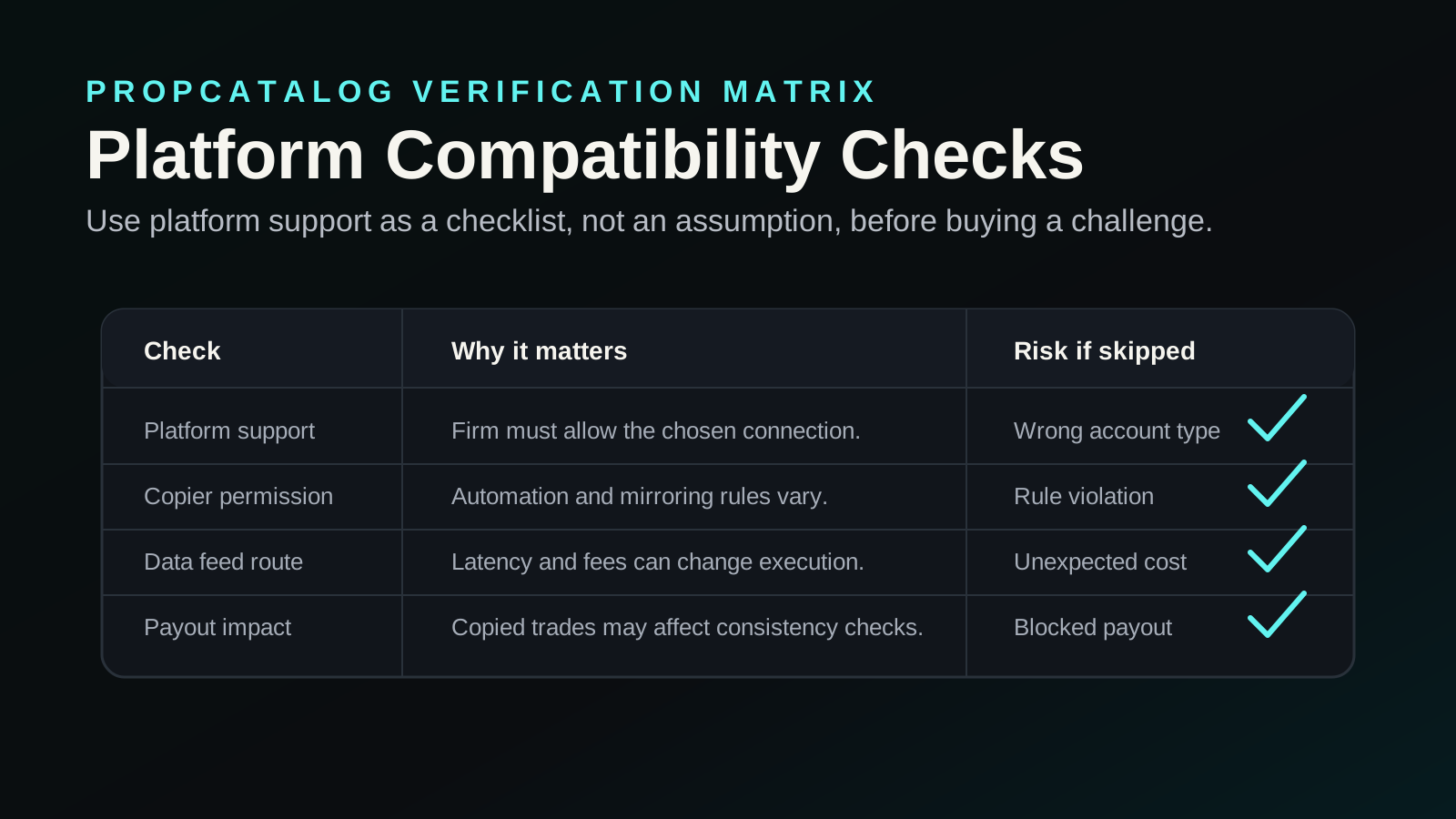
If a firm confirms that both cTrader and copy trading are permitted, the technical setup still carries risks that can affect your challenge performance or account standing. The following notes apply to common cTrader copy configurations.
cTrader Copy (native)
cTrader’s built-in copy trading module allows a signal provider account to broadcast trades to follower accounts. If your prop firm account is set up as a follower, trade execution on the prop account depends on the latency between the signal provider and the follower, the lot scaling settings, and whether the prop firm’s broker infrastructure supports the cTrader Copy API. Confirm with the firm whether their cTrader instance is a standard Spotware deployment or a white-label version, as white-label versions sometimes have restricted modules.
Third-party copy tools (e.g., trade copiers via bridge or VPS)
Some traders use third-party trade copier software that connects to cTrader via API or FIX protocol to replicate trades from a master account. This approach requires:
- API access to the prop firm’s cTrader account — confirm whether the firm grants this.
- A VPS with low latency to the firm’s server location.
- Compatibility between the copier software and the specific cTrader version the firm uses.
- Explicit rule confirmation that API-based trade replication is permitted.
Lot sizing and drawdown risk
Copy trading setups that do not correctly scale lot sizes from the master account to the prop account are a common source of rule violations. If the master account trades 1 lot and the prop account copies at 1:1 without adjustment for the prop account’s balance and drawdown limits, a single trade can breach the maximum daily loss rule. Always calculate the correct scaling ratio before going live, and test on a demo if the firm offers one.
Setup Mistake Checklist: What to Verify Before Connecting
The following checklist covers the most common errors traders make when setting up a cTrader copy trading connection on a prop firm account. Work through each item before placing a single live trade.
- Confirm cTrader is available for your specific account type. Some firms offer cTrader only for certain challenge tiers or account sizes. Verify at checkout, not just on the homepage.
- Read the copy trading rule in full. Do not rely on a summary or a forum post. Find the exact clause in the firm’s terms of service or trading rules document.
- Get written confirmation if the rule is ambiguous. Submit a support ticket with your exact setup described and keep the response.
- Check whether the firm’s cTrader instance supports the module you need. White-label cTrader deployments may not include cTrader Copy or API access.
- Calculate lot scaling before going live. Mismatched lot sizes between master and follower accounts are the leading cause of accidental drawdown breaches in copy setups.
- Verify latency between your signal source and the prop account server. High latency can cause slippage that affects whether trades pass the firm’s consistency or drawdown checks.
- Check whether the firm bans group copying or simultaneous account copying. If you plan to copy the same signal into multiple prop accounts, confirm this is explicitly permitted.
- Confirm that your EA or copier software does not trigger the firm’s automated risk detection. Some firms flag accounts that show identical trade timing across multiple accounts.
- Review the firm’s news trading and weekend holding rules. Copy trading setups may execute trades during restricted windows if the signal provider trades at those times.
- Test the full connection on a demo account if available. Do not assume the connection works correctly until you have seen trades replicate accurately under live market conditions.
Costs, Data Feeds, and Add-Ons to Verify
Using cTrader at a prop firm may involve costs beyond the challenge fee. These vary by firm and broker infrastructure, and none of the following should be assumed to be free or included without checking the firm’s pricing page or dashboard.
Challenge and account fees
The challenge fee is the primary cost. Some firms charge a one-time fee; others charge monthly. Verify whether the fee is refundable upon passing, and under what conditions. See the pricing hub for a breakdown of how prop firm fee structures differ.
Platform fees
cTrader itself does not charge end users a platform fee in most configurations, but the broker or prop firm may pass through infrastructure costs. Confirm whether there is a monthly platform fee, a data feed subscription, or a minimum deposit requirement associated with the cTrader account.
VPS costs
Running a copy trading setup reliably typically requires a VPS. Some prop firms offer a free VPS above a certain account size or after a certain number of funded months — verify this directly. Third-party VPS providers charge separately, and the cost varies by server location and specification.
Data feed and spread considerations
cTrader accounts at prop firms are typically connected to the firm’s liquidity provider, which determines spreads and available instruments. If your copy trading strategy was developed on a different broker’s data feed, spread differences can affect trade execution and strategy performance. Confirm the firm’s typical spread range for the instruments you trade before committing.
Add-on tools
Some cTrader copy setups require third-party plugins or bridge software that carry their own licensing fees. Confirm compatibility with the firm’s cTrader version before purchasing any add-on tool.
Which Trader Type Fits This Platform Setup
A cTrader and copy trading setup at a prop firm is not suitable for every trader. The following profiles describe who this setup is most and least appropriate for.
Potentially suitable
- Traders who have a verified, profitable strategy running on a personal live account and want to scale it through a prop firm’s capital by self-copying — provided the firm explicitly permits this.
- Traders who are already familiar with cTrader’s interface and do not want to adapt to MetaTrader for a prop challenge.
- Traders who need cTrader’s native depth of market, advanced order types, or cAlgo scripting environment for their strategy.
Less suitable
- Traders who plan to follow a third-party signal provider — most prop firms ban this, and the risk of account termination is high.
- Traders who have not tested their copy setup under prop firm conditions, including drawdown limits and restricted trading windows.
- Traders who are new to cTrader and would need significant time to learn the platform during a timed challenge.
- Traders targeting futures, stocks, or options prop firms — cTrader is not a standard platform in those categories.
Alternatives to Compare If cTrader or Copy Trading Is Not Supported
If a firm does not support cTrader, or if its copy trading rules do not fit your setup, there are practical alternatives to evaluate. Use the compare hub to run side-by-side checks on firms by platform and rule criteria.
MetaTrader 4 and MetaTrader 5 with copy tools
MT4 and MT5 are the most widely supported platforms across prop firms. MT5 includes a native copy trading module (Signals), and both platforms support a large ecosystem of third-party trade copier tools. However, the same rule verification process applies — platform support does not automatically mean copy trading is permitted.
Proprietary platforms with built-in copy features
Some prop firms have built their own platforms that include copy or mirror trading as a native feature, specifically designed to comply with their own rules. These are worth investigating if your primary goal is copy trading rather than cTrader specifically.
Firms that explicitly market copy trading accounts
A small number of prop firms have created challenge types specifically designed for copy traders or signal followers. These are distinct products from standard funded trader challenges and typically have different rules, fee structures, and payout conditions. Verify the full rule set before purchasing, as these products vary significantly. Check firm reviews for trader-reported experiences with copy-specific account types.
Running a personal funded account alongside a prop challenge
If no firm supports your exact cTrader copy setup, an alternative is to trade the prop challenge manually while running your copy setup on a personal account. This avoids rule violations while still allowing you to scale through prop capital on strategies you trade directly.

Peter Fryers
Peter writes PropCatalog's firm reviews, pricing analysis, and cross-market comparison content.
FAQs
Can I use cTrader Copy on a prop firm funded account?
Only if the firm explicitly permits it. cTrader Copy is a native feature of the cTrader platform, but prop firms set their own rules about whether copy trading is allowed on challenge or funded accounts. Check the firm’s trading rules page and confirm via support before using any copy feature.
What happens if I use copy trading on a prop account where it is banned?
Most firms treat this as a rule violation and will terminate the account without refunding the challenge fee. Some firms have automated detection systems that flag accounts showing trade patterns consistent with copy trading. The risk is account closure and loss of any profits accumulated during the challenge.
Is self-copying — copying from my own live account into a prop account — allowed?
This depends entirely on the firm’s rules. Some firms permit self-copying; others ban it because it can be used to hedge positions across accounts. Read the specific clause in the firm’s terms of service and get written confirmation if the language is unclear.
Do all prop firms that offer cTrader support the cTrader Copy module?
No. Some prop firms use white-label versions of cTrader that may not include all native modules. Confirm with the firm whether cTrader Copy, cAlgo, and API access are available on your specific account type before assuming they are included.
What is the biggest technical risk in a cTrader copy trading setup at a prop firm?
Lot size scaling is the most common technical risk. If trades are copied at the wrong ratio relative to the prop account’s balance and drawdown limits, a single trade can breach the firm’s maximum daily loss rule and result in account termination. Always calculate and test your scaling settings before going live.
Are there prop firms built specifically for copy traders?
A small number of firms have created account types marketed toward copy traders or signal followers. These products have different rules from standard funded trader challenges and must be evaluated on their own terms. Verify the full rule set, fee structure, and payout conditions directly with the firm before purchasing.